Krill and fisheries
Krill eat phytoplankton. When and where the plankton bloom sets how much krill there is — and krill underpin both polar wildlife and a managed commercial fishery.
Plankton Base collaborates with expedition vessels and curious travelers to collect critical data on the foundation of our oceans. We focus on understanding the fuel that feeds our planet - the plankton. Together, we protect the planet's most vulnerable ecosystems.
Every sample becomes publicly available data, contributing to global networks like the UN Ocean Decade, OBON, SOOS, and the 5th International Polar Year.
Read moreThe world’s most remarkable journeys deserve a deeper purpose. Plankton Base collaborates with expedition operators to turn every voyage into a meaningful science connection. We provide the programming, training, and frameworks that let your team deliver consistent, rigorous, high-quality research experiences on board — without adding complexity to your operations. Because expedition itineraries return to the same remote coastlines multiple times in one season, we build a time-series monitoring change — throughout the season, year on year — producing open-access data that the scientific community, the public, and the world can use. Backed by a diverse board of advisors in strategy, management, and polar science, we translate complex research into field experiences that spark joy and curiosity in participants and inspire protection for our oceans. You bring the journey. We help you make an impactful science experience.
Your guests will experience the joy of participating in the scientific process. We provide the curated sampling instruments and training required to enable hands-on, participatory science that contributes to the global baseline monitoring of plankton.
If you are going on a voyage or expedition to remote regions of the world, you can become part of the field science by joining ships that participate in the Plankton Base program. See yourself as contributors to real discovery by asking your travel agent or operator if they offer the Plankton Base program.
Your support of Plankton Base means the world to us and helps keep the spark of curiosity, shared discoveries, and environmental stewardship efforts flowing.
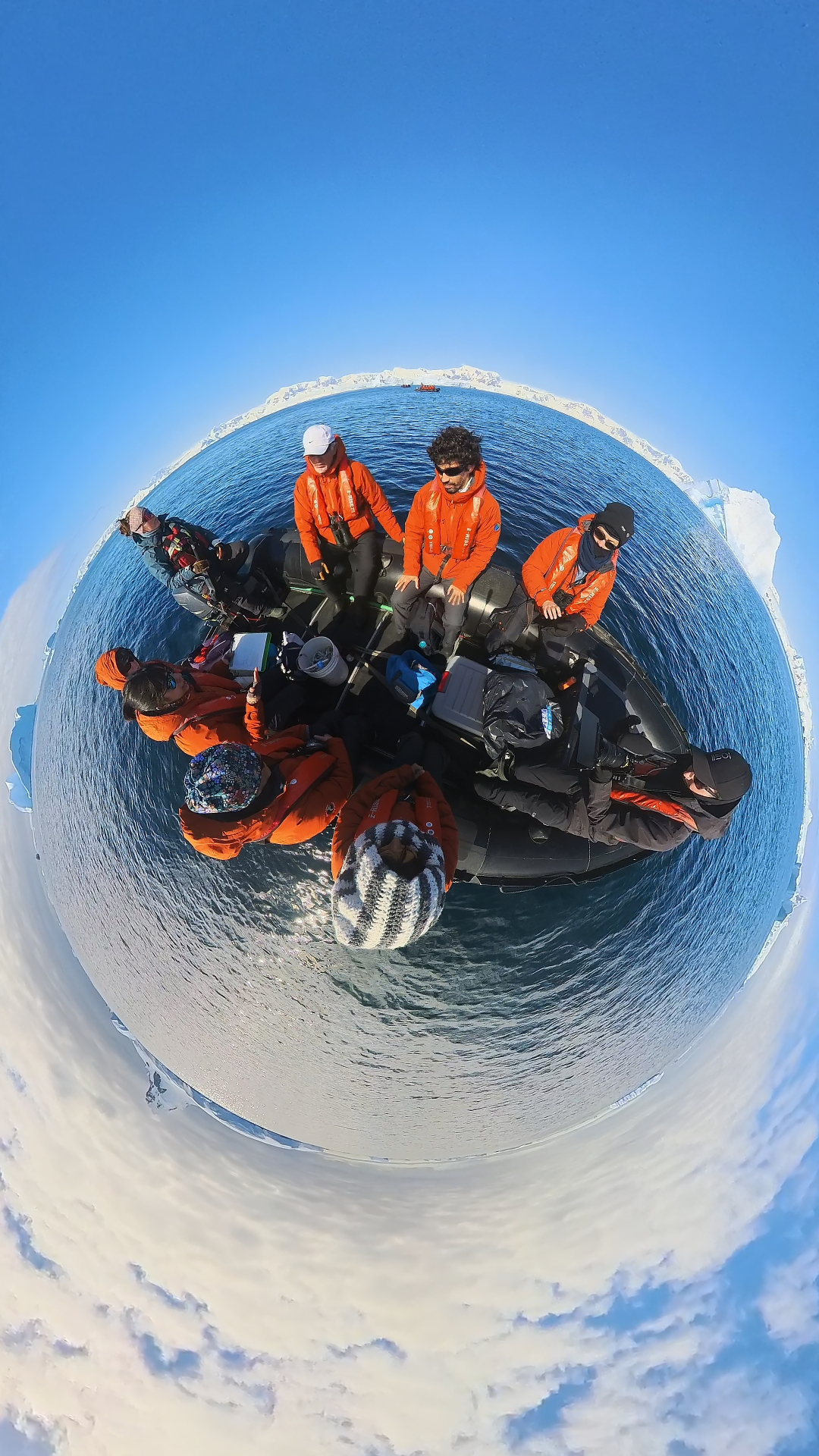
Every sample collected onboard moves through a transparent scientific pipeline — from the field to publicly accessible data analyzed for real-world ecological impact.
On the water, your team and guests deploy robust oceanographic gear, capturing critical plankton samples and water measurements to fuel a long-term climate time-series.
At the end of the season, preserved samples and data are transferred off the ship where our team processes them in partner laboratories for processing.
Samples are processed and analyzed using advanced molecular tools, sequencing and microscopy.
Raw and processed data is uploaded to online open-access platforms, contributing to the Findable, Accessible, Interoperable, and Reusable (FAIR) Data Principles, elevating global ocean literacy and climate research.
Plankton Base team welcomes the public and scientific community to use the data. In addition Plankton Base continues to produce peer-reviewed publications, seasonal reports from in field work, and efforts to partner with other institutions, universities, national research programs and global initiatives like United Nations Decade for the Ocean, SOOS, OBON, and similar monitoring programs.
Plankton are the foundation of aquatic ecosystems and the unsung heroes of our climate. Phytoplankton generate up to 50% of the oxygen we breathe and form the base of the global marine food web. They are directly consumed by zooplankton and small fish, which in turn support larger predators — everything from sardines to massive blue whales. Through the biological pump, phytoplankton pull billions of metric tons of CO₂ from the atmosphere; when they die, they sink to the ocean floor, locking carbon away in the deep sea. Beyond the environment, plankton play a massive role in the global economy — the fossilized remains of ancient plankton are the primary source of the petroleum and natural gas we use for energy today.
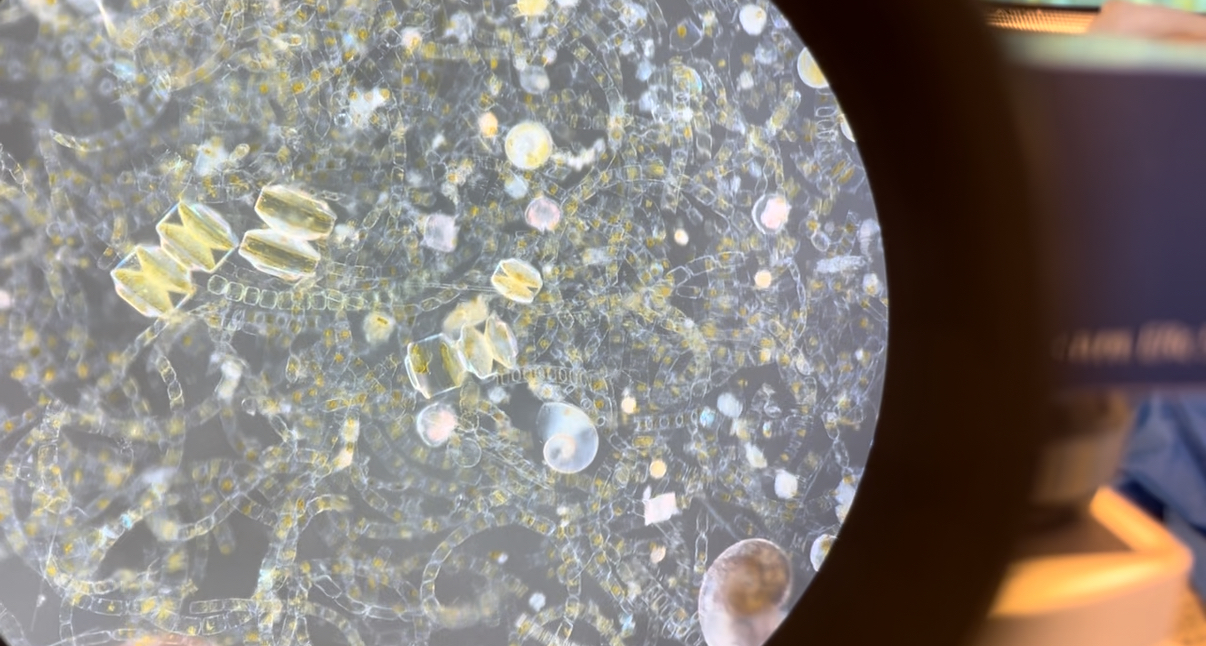
Plankton are small, but they are the measurement everything else depends on. We start in Antarctica and the Arctic — the places changing fastest — and build a season-by-season record there before expanding.
Krill eat phytoplankton. When and where the plankton bloom sets how much krill there is — and krill underpin both polar wildlife and a managed commercial fishery.
Whales, penguins and seals feed on krill and small fish. Shifts at the base of the web show up later in the animals everyone travels to see.
Phytoplankton pull CO₂ into the ocean and some of that carbon sinks to the deep sea. Knowing which species bloom, and when, tells us how much carbon moves.
Glacial melt changes the light, salinity and nutrients in polar fjords. Plankton respond first, which makes them an early signal of change.
Plankton Base is a 501(c)(3) nonprofit organization registered in California (USA) with an ambition to reimagine the ocean data pipeline by transforming global sea-going travelers into active network of climate data collectors.
Stay up to date with the latests news from our program